

By Adam Cook and John Evans –
“We have messed up design patent infringement.” So declared Chief Judge Moore in a heated dissent from the Federal Circuit’s denial of en banc review in Range of Motion v. Armaid—one of the most closely watched design patent cases in recent years. The case has exposed a deep rift among the judges over foundational questions: How should courts assess design patent infringement? And who decides the scope of design patent claims—judge or jury?
As we covered in a prior blog post, the district court held that many aspects of the claimed massage device were functional—a legal determination that restricts the ornamental scope of the design patent. Building on that ruling, the court granted summary judgment of noninfringement, and a divided Federal Circuit panel affirmed. Chief Judge Moore dissented, arguing that the en banc decision in Egyptian Goddess v. Swisa has turned infringement analysis into a “spot the differences” game—one that, in her view, departs from the venerable ordinary observer test of Gorham v. White.
On its face, the panel majority’s analysis looks like a routine application of Egyptian Goddess. That decision held that “a trial court can usefully guide the finder of fact” by, among other things, “distinguishing between those features of the claimed design that are ornamental and those that are purely functional.” 543 F.3d 665, 680 (Fed. Cir. 2008) (en banc). In other words, the judge construes the claim’s ornamental scope (as a matter of law) before the jury compares the designs for substantial similarity (as a matter of fact).
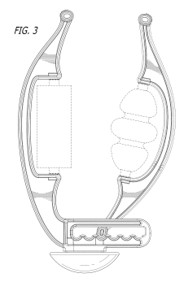
But hard cases make bad law—and these designs test the limits of that framework. Take a look:
|
Claimed Design |
Accused Design |
 |
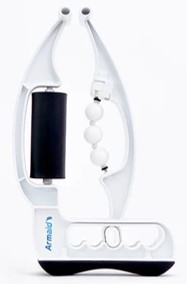 |
Even after accounting for functional aspects, the residual ornamental similarity seems hard to deny. That lingering resemblance may be why Chief Judge Moore believes the infringement question should have gone to a jury—and why she questions whether Egyptian Goddess remains faithful to Gorham’s “substantially the same” standard.
On August 11, 2026, the Federal Circuit denied the patent owner’s petition for en banc review. Range of Motion Prods., LLC v. Armaid Co. Inc., No. 2023-2427, 2026 WL 2318398 (Fed. Cir. Aug. 11, 2026). The vote was close: four judges (Moore, Reyna, Stoll, and Stark) would have granted review, but the remaining active judges disagreed. The panel opinion affirming summary judgment of noninfringement is here.
The concurrence and the dissent
Though the full court declined to rehear the case, the judges remain as divided as ever—and both sides had plenty to say. Judge Cunningham, who authored the original panel majority decision, wrote a concurrence defending that ruling. Her argument: assessing whether two designs are “substantially the same” necessarily involves analyzing both similarities and differences. Egyptian Goddess, she explained, simply identifies situations where the dissimilarity is so clear that no ordinary observer could be deceived—making comparison to prior art unnecessary. She also pushed back on the idea that functionality determinations belong with juries. Patent claim construction, she noted, has long been a question of law for judges—and design patents are no exception. She likened the court’s role to a “trail guide, placing flags and signposts to delineate the boundaries of the claimed design.” Her analysis tracks the black-letter law of Markman, Phillips, and Egyptian Goddess.
Chief Judge Moore expressed pointed disagreement. Reprising her panel dissent, she went further—arguing that functionality’s impact on claim scope is a factual question for the jury, not a legal one for the judge. In her view, Egyptian Goddess places too much emphasis on dissimilarities and not enough on similarities, contrary to Gorham. She believes that this allows courts to take a “shortcut” past the prior art, resolving infringement on summary judgment far too often.
She also introduced a new argument. Design patents, she observed, are defined by their figures—not words. So the Markman rationale for assigning claim construction to judges (that judges are trained to interpret “written instruments”) doesn’t translate well to design patents, where infringement is, as she put it, “a side-eye glance by an ordinary observer at two designs to determine substantial similarity.” And she pointed to an inconsistency: functionality is treated as a jury question in trademark infringement, trade dress, and product liability cases. Even in design patent law, whether a claim is purely functional—and thus invalid under 35 U.S.C. § 171—is a question for the jury. Why, then, should the functionality inquiry be a question of law when it arises in the infringement context?
The en banc denial draws clear battle lines. Both sides raise valid arguments, and the stakes are high: foundational questions about claim construction, infringement methodology, and the jury’s role in patent trials all hang in the balance. A petition for certiorari seems likely. If the Supreme Court takes up the case, it will confront not just a sharp Federal Circuit split, but a chance to fundamentally reshape design patent law for decades to come.
Takeaway: The Federal Circuit’s denial of en banc review in Range of Motion v. Armaid leaves the ordinary-observer framework of Egyptian Goddess in place, but four judges would have taken the case. The split is over whether a judge may filter out functional features and decide “plainly dissimilar” designs on summary judgment, or whether that comparison belongs with the jury.